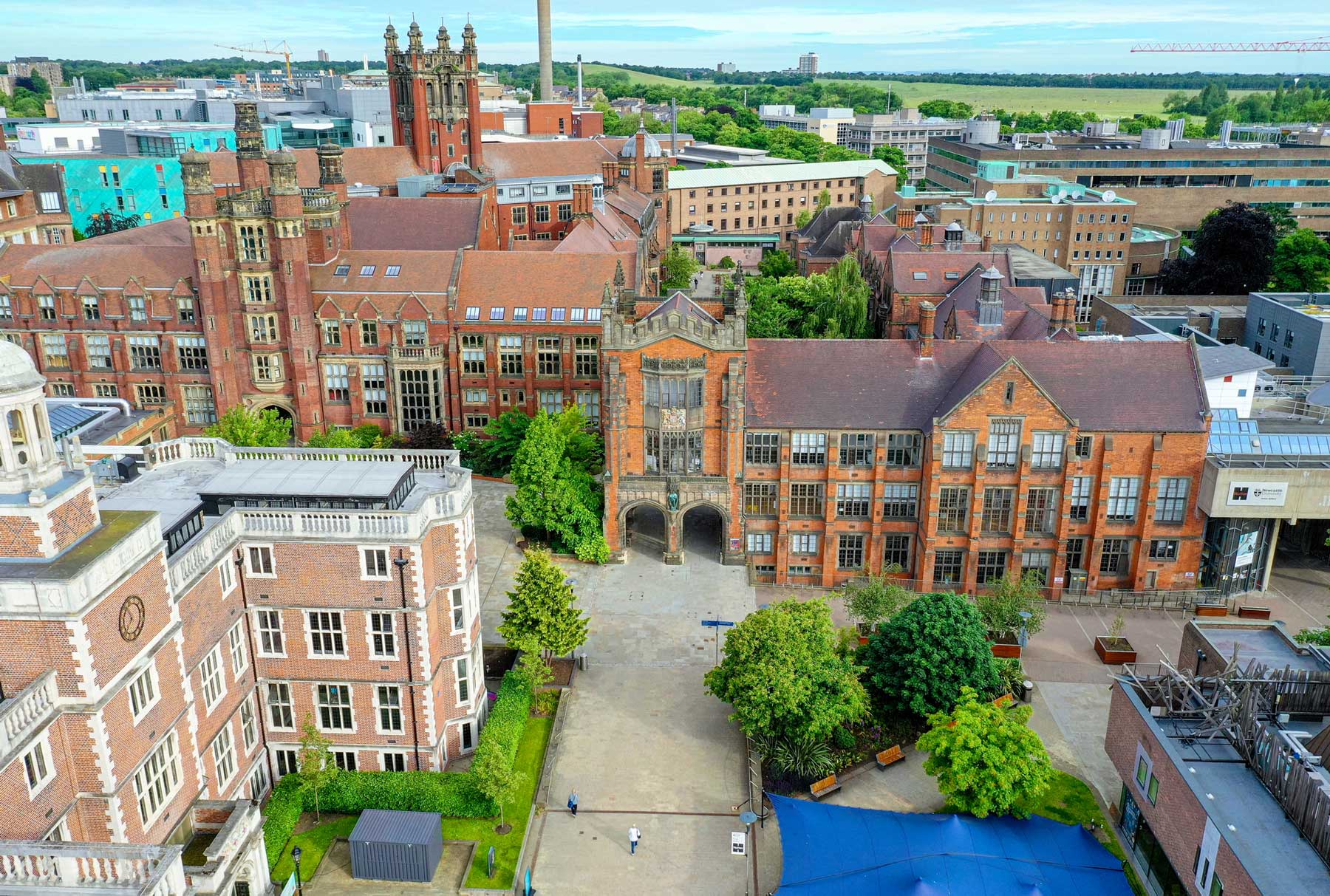
Education since 1834
Dedicated to life-changing education and research, our history spans 190 years.
19th century
Humble beginnings in the 1830s
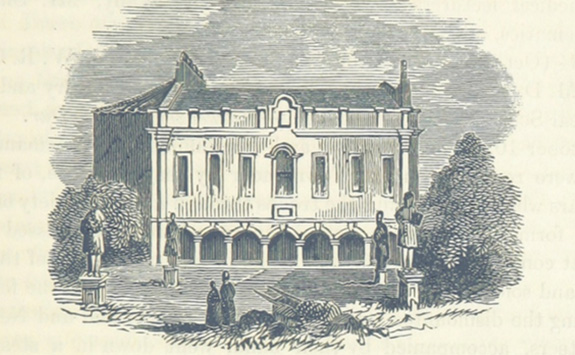
In 1832, local surgeon John Fife rented a converted auction room at Bell’s Court, a narrow thoroughfare with an exit onto Pilgrim Street. He conducted medical training to eight students, one of whom was John Snow who is now world renowned as the ‘father of epidemiology’.
Following a successful winter session, the offering expanded in 1834 with the renting of the vacant Barber Surgeons’ Hall. This was located near the Holy Jesus Hospital in Manors. This marked the beginning of the Newcastle-upon-Tyne School of Medicine and Surgery, Newcastle University’s predecessor.
On 1 October 1834 the School of Medicine and Surgery was formally established. The first cohort numbered fewer than a dozen students, but the vision was ambitious: to create a centre of medical learning that could serve a rapidly industrialising region.
Image caption: ‘Hall of the Barber Chirurgeons’ (1830). Image from Moses Aaron Richardson’s 'The Local Historian's Table Book of remarkable occurrences, historical facts, traditions, legendary and descriptive ballads, connected with the Counties of Newcastle-upon-Tyne, Northumberland, and Durham. Historical Division. vol. 1-5. Produced under British Library’s creative commons licence.
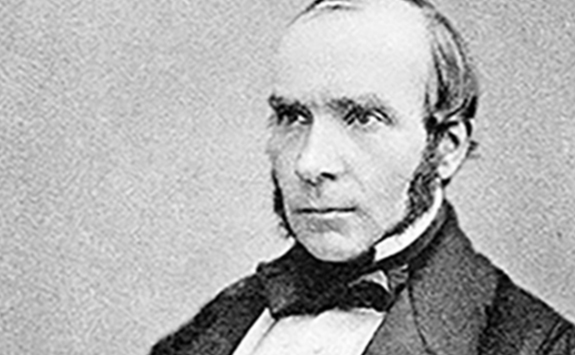
Early alumni leading the way in the 1840s
Among the early students at Newcastle’s School of Medicine and Surgery was a young apprentice named John Snow. In 1847, Snow identified that contaminated water was the source of cholera outbreaks in London. This discovery transformed public health and saving countless lives. A fitting legacy for one of the school's earliest alumni.
Having moved to London in 1837, Snow encountered multiple cholera outbreaks and created a map to plot out the cases. He hoped to see a pattern of how the disease was spreading. This exercise uncovered that all of the cases had used the same shared water pump and that cholera was spread via contaminated water. Before this, people thought the disease spread by miasma, or ‘bad air’.
His findings inspired fundamental changes in the water and waste systems of London. This led to similar changes in other cities, and a significant improvement in general public health around the world.
Today, this discovery is considered the foundation of epidemiology – the study of diseases, their spread and causes. Snow was a founding member of the Epidemiological Society of London in 1849.
Joining Durham University in the 1850s
In 1852, the College of Medicine formally joined Durham University, laying the foundations for a stronger academic future.
The college awarded its first 'Licence in Medicine' (LicMed) under the auspices of the University of Durham in 1856. With external examiners from Oxford and London, they became the first medical examining body on the United Kingdom to institute practical examinations alongside written and 'viva voce' examinations – a radical step at the time.

20th century
Treating wounded soldiers in the 1910s
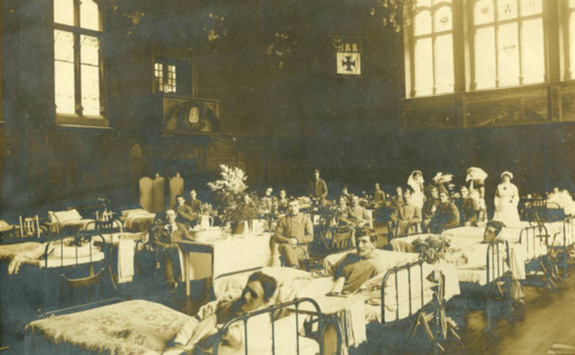
During the Great War, Armstrong College, the predecessor to Newcastle University, was requisitioned by the War Office to form the 1st Northern General Hospital.
The Armstrong Building, the King Edward VII School of Art and the Agriculture Building became hospital wards serving over 41,000 patients in five years. The Armstrong Building is the heart of our campus where thousands of students graduate each year. The King Edward VII School of Art is now the Hatton Gallery and the Agriculture Building is now our School of Architecture.
Students who remained at the University during the conflict were instead taught in buildings across the city. This included the Quaker Meeting House in Pilgrim Street and the Lit and Phil Library, with teaching not returning to campus until October 1919.
Approximately 1,521 people who studied at or taught at Armstrong College and the College of Medicine served in the First World War. At least 275 of these making the ultimate sacrifice and dying in service.
A new home for medicine in Newcastle in the 1930s
The King George VI Building was constructed between 1936 and 1939, designed by architect P. Clive Newcombe. It was made possible through a remarkable donation of £200,000 from local shipowner and former Lord Mayor of Newcastle, Sir Arthur Munro Sutherland.
The gift enabled Durham University’s King's College to create a modern Medical School close to the Royal Victoria Infirmary. This strengthened the link between teaching, research and patient care.
The building opened at a moment of transformation for higher education in Newcastle. King's College, the predecessor of Newcastle University, had only recently been created through the merger of Armstrong College and Newcastle's College of Medicine. At the time of the opening, 409 students were studying medicine, surgery and related disciplines, including 50 women.
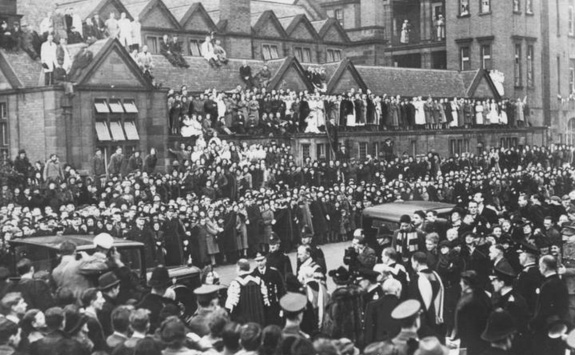
The excitement surrounding the new Medical School was soon overshadowed by world events. Students had begun studying in the building during autumn 1938, but its official royal opening in February 1939 (pictured) came only months before the outbreak of the Second World War.
As wartime pressures mounted, hospitals faced increasing staff shortages. Senior medical students were called upon to take on greater responsibilities. The King George VI Building became part of a wider national effort to train and support the healthcare workforce during one of the most challenging periods in modern history.
Pioneering studies into infant health and mortality in the 1940s
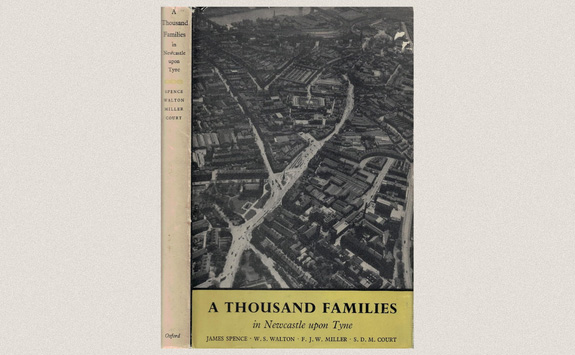
The pioneering Thousand Families Study was launched in 1947. It followed children born in Newcastle revealing how poverty, childhood health and early-life experiences influence long-term wellbeing. Nearly 80 years later, researchers continue to learn from its findings.
The study was led by Newcastle alumni Sir James Spence and Fred Miller, along with King's College academic Donald Court. It followed all 1,142 children born in Newcastle from May - June 1947 to track health outcomes, investigating the high infant mortality rate in the city.
The major epidemiological cohort study tracked the children throughout their life and the legacy of the study continues on campus today. Dr Mark Pearce leads the ongoing study.

A medical school for the future in the 1980s
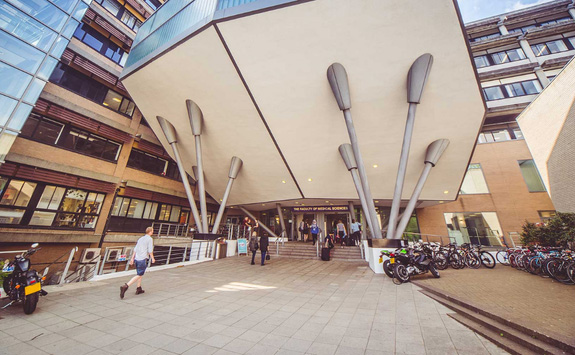
In 1984, medical students left the King George VI building, their home for the past 40 years. They moved to the current Medical School on Framlington Place.
The new Medical School was officially opened by HM Queen Elizabeth The Queen Mother. She had also been present with King George in 1939 to open the former Medical School.
Facilities include two 400-seat lecture theatres, a laboratory to learn and practise clinical skills, and a specialist medical library.
21st century
Bringing a city vision to Life in the 2000s
The pioneering International Centre for Life science village opened in Newcastle’s city centre in 2000. The site is home to Newcastle University’s Institute of Genetic Medicine. It brings together NHS clinicians and university academics under one roof.
Built on the site of the old Newcastle Infirmary, and designed by celebrated North East architect (and Newcastle University alumnus) Sir Terry Farrell.
Scientists based at Life were the first in the world to clone a human embryo back in 2005. The tireless work of the researchers and clinicians on site has continued ever since, making a difference to countless lives.

Reducing relapse for childhood cancer survivors in 2003
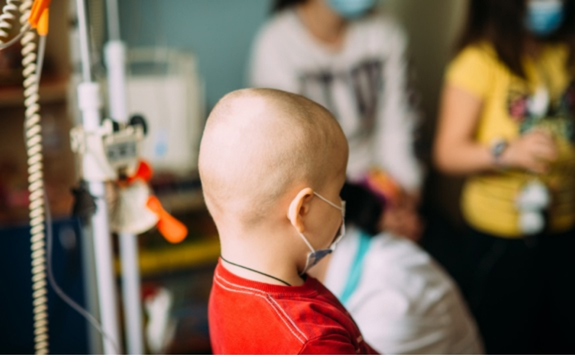
In 2003, we discovered a complex abnormality of chromosome 21 (iAMP21). It affects children with acute lymphoblastic leukaemia and driving a very high risk of relapse.
Prospective clinical trials showed patients with iAMP21 benefited from high intensive chemotherapy. iAMP21 is now part of the WHO classification with high intensity chemotherapy used to treat patients worldwide.
Bringing Newcastle’s medical training to Malaysia in 2011
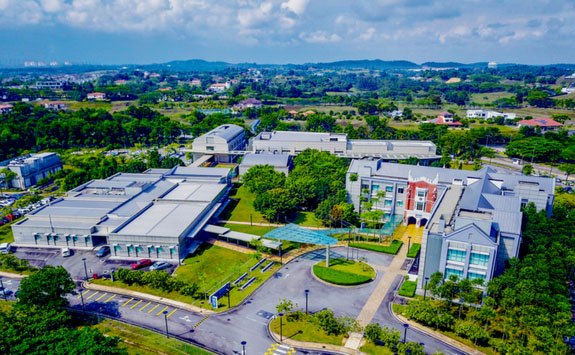
The opening of Newcastle University Medicine Malaysia (NUMed) in 2011 marked a major milestone. It made Newcastle the first UK university to establish an international branch campus dedicated to medicine.
NUMed Malaysia provides undergraduate degrees in medicine (MBBS) and biomedical sciences (BSc). There are also opportunities for foundation and postgraduate study, with identical courses to those provided in Newcastle Medical School. They lead to the same degree, with students gaining a UK qualification with international recognition.
In a nod to its connection to Newcastle and the University’s medical history, NUMed’s official address is Bell’s Court. The campus has a replica of Newcastle University’s iconic Arches.
Proving Type 2 diabetes is reversible in 2016
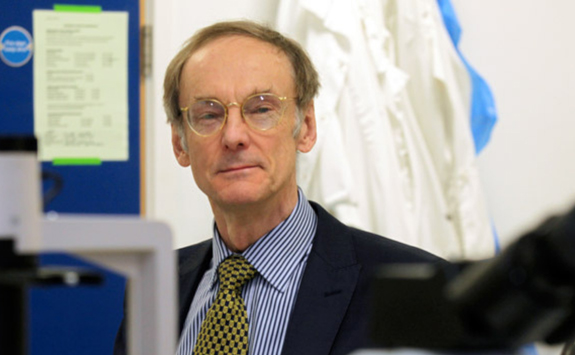
Professor Roy Taylor MBE, Professor of Medicine and Metabolism at Newcastle University, has pioneered research into Type 2 diabetes funded by Diabetes UK.
Type 2 diabetes has long been regarded as a chronic disease. However, Professor Taylor’s studies (published in 2016) using innovative magnetic resonance methods confirmed his Twin Cycle Hypothesis. He found that Type 2 diabetes is caused by excess fat within the liver and pancreas. In the liver, this fat causes a poor response to insulin and produces too much glucose. In the pancreas, the fat inhibits insulin secretion.
Professor Taylor found that people who follow a low-calorie diet with support from their GP can reverse their Type 2 diabetes. This app, bringing their blood sugar to a normal level, to a point where they no longer need medication. Following trials, the low-calorie diet is now available in England on the NHS.
Newcastle prosthetic limb wins global award in 2018
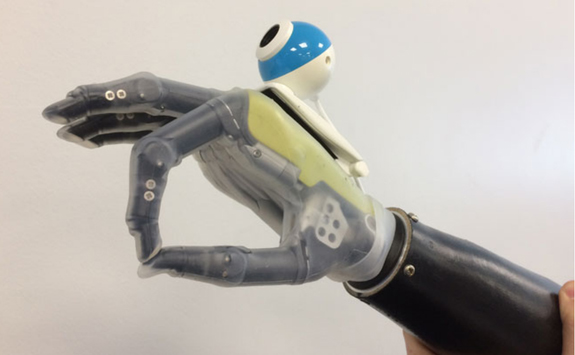
A bionic hand developed by Newcastle University biomedical engineers won a Netexplo UNESCO Award in 2018.
The ‘intuitive’ hand can react without thinking thanks to a camera. It instantaneously takes a picture of the object in front of it, assesses its shape and size and triggers a series of movements in the hand.
Bypassing the usual processes which require the user to see the object, physically stimulate the muscles in the arm and trigger a movement in the prosthetic limb, the hand ‘sees’ and reacts in one fluid movement.
Geordie cancer drug approved by the NHS in 2019
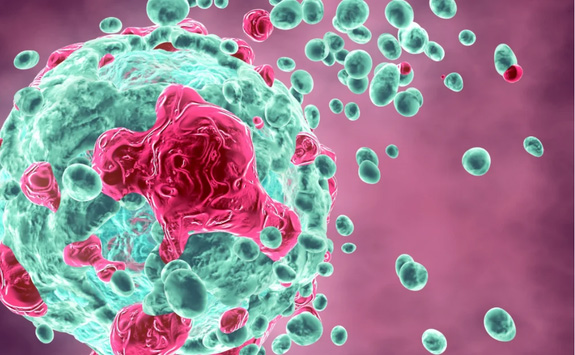
An ovarian cancer treatment, developed by scientists at Newcastle University, is leading the way internationally as a treatment option for the life-threatening condition.
Rubraca® is a very well-tolerated oral treatment. It gives women better quality of life for longer, without the sometimes debilitating side-effects of chemotherapy.
It can significantly delay progression of cancer after chemotherapy and delay subsequent chemotherapy treatment.
Given in tablet form twice daily every day, it has been shown to prevent the cancer’s progression for twice as long.
The treatment is a class of drug called a PARP inhibitor which exploits a defect in the cancer cell’s ability to repair normal wear and tear to its DNA. This allows it to kill the tumour cells without unduly harming healthy cells.
World-first IVF technique sees 8 healthy babies born in 2025
Over the past two decades, Newcastle researchers have been working to prevent mitochondrial DNA disease. They were the first to have a pioneering IVF technique to prevent the disease being inherited licensed for use worldwide.
Known as ‘mitochondrial donation’, the techniques were developed by scientists at the Wellcome Trust Centre for Mitochondrial Research at Newcastle University. It involved removing faulty mitochondria inherited from the mother and replacing them with the healthy mitochondria of another woman. The nuclear DNA, containing 99.9% of genetic material from the mother and father, remains unchanged.
In 2025, it was reported that this process had resulted in eight healthy babies born. Prior to this scientific breakthrough, around one in 6,500 children were born with severe mitochondrial diseases. This can be devastating and particularly affect tissues that have high energy demands, brain, muscle (including heart), liver and kidney, and can also lead to death in early infancy.