
Better Trials
We help life-sciences companies design and deliver faster, more efficient and more informative clinical studies using innovative statistical methods.
Better trials through better statistics
Clinical development is expensive, time-consuming and full of uncertainty. Conventional trial designs do not always make the best use of accumulating data, existing evidence or advances in statistical methodology.
Better Trials helps life sciences companies apply innovative statistical approaches to make clinical development more efficient, more informative and better
aligned to key development decisions.
From protocol development through to interim and final analysis, we help partners move innovative designs into real-world studies.
Solving high-value problems
Better Trials links our research expertise to solve high-value problems in drug development.
We support companies to utilise efficient statistical design and analysis approaches in their clinical development plans to achieve:
- faster trials
- better evidence
- smarter decisions
Adaptive Designs and Multiple Testing Procedures
Design more flexible and efficient trials while maintaining statistical rigour
Adaptive designs are a way to improve the efficiency and participant benefit of clinical trials. With an adaptive design, information gathered during the trial can be used to change the design in a statistically robust way. There are many types of adaptive designs that are possible for different situations in all phases of trials.
Lectures
- Introduction to adaptive design
- Group-sequential designs
- Introduction to multiple testing in trials
- Advanced multiplicity correction
- Multi-arm multi-stage designs 1
- Multi-arm multi-stage designs 2
- Analysis after adaptive trials
- Sample size re-estimation
- Platform trials and practical issues
Lectures 1-8 each have an associated practical session.
- read the 2026 course description
- save the dates: 01-02 July 2027 in Newcastle
Leveraging External Information
Learn approaches to incorporating historical, and external data into clinical trials
The ability to utilise external information (such as from disease cohorts, previous trials, and expert opinion) when designing and analysing clinical trials brings many benefits, including maximising the evidence provided by the trial, reducing the sample size required (particularly important for rare disease trials) and improving the generalisability of trial results.
Lectures with practical sessions
- Limitations of clinical trials and how using external information could help
- Introduction to Bayesian inference
- Bayesian approaches to borrowing information
- Bayesian and hybrid approaches to designing trials
- Prior elicitation
- Bayesian adaptive designs
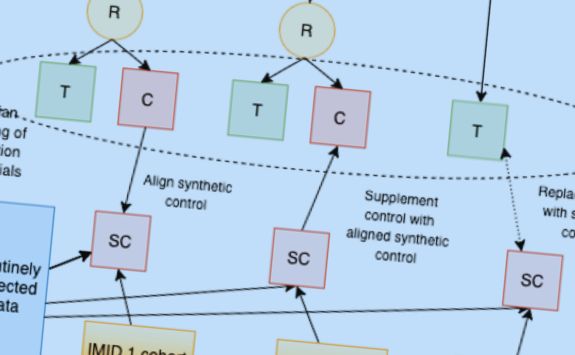
- Synthetic control approaches
- read the 2026 course description
- save the dates for 2027: 05-06 July in Newcastle
Precision Medicine Trials
Design trials that identify which treatments work best for which patients
Precision medicine is about going beyond assessing whether a new treatment works on average to predicting which subgroups of patients receive benefit and to what extent. When subgroups, often defined by biomarkers, genetic, phenotypic or psychosocial characteristics, are associated with a treatment’s efficacy or toxicity, precision medicine offers substantial advantages to patients, trial sponsors, and the wider healthcare system. However, a barrier to realising the promise of precision medicine is the inappropriate use of traditional clinical trial design and analysis, which rely on estimates of population-averaged effects.
Lectures
- Precision medicine and traditional clinical trials
- Basket trials and borrowing of information
- Umbrella and platform trials
- Analysing high-dimensional biomarker data in trials (Part I)
- Adaptive enrichment and error rate control
- Adaptive interventions and chronic disease approaches (Crossover trials, N-of-1 trials, SMART designs)
- Analysing high-dimensional biomarker data in trials (Part II)
- Practical considerations for precision medicine trials
- read the 2026 course description
- save the dates for 2027: 07-08 July in Newcastle
Expertise you can trust
Led by internationally recognised researchers in innovative clinical trial methodology, Better Trials gives you direct access to specialist expertise.
The team is embedded within the Newcastle University Biostatistics Research Group, one of the UK’s leading academic centres for the development and implementation of efficient clinical trial designs.
Meet the team
Professor James Wason
James is Professor of Biostatistics at Newcastle University. He has more than 15 years’ experience developing, evaluating and implementing innovative clinical trial designs. With more than 200 research papers and has worked extensively with clinical and industry collaborators to apply novel statistical methods in real-world trials.
Dr David Sinclair
David is a Lecturer based in Newcastle University's Population Health Sciences Institute. He specialises in routinely collected data and electronic health records, including the Clinical Practice Research Datalink (CPRD) and the English Longitudinal Study of Ageing (ELSA). He uses real-world data to inform clinical trial design and generate robust evidence.
Dr Bethan Sayers
Bethan is an IP and Commercialisation Manager with extensive experience of business and university collaboration. She coordinates the commercial aspects of Better Trials projects, helping partners engage with the team and access the right expertise.