John Strachan
John's PhD project is titled: 'Technological choice and variation in prehistoric metalworking: a transdisciplinary investigation'
Project Description
My project uses an interdisciplinary methodology to investigate Early Bronze Age metalworking techniques in Scotland and Northern England, with a specific emphasis on identifying regional craft traditions in this area. The north of Britain is generally under-researched in terms of metallurgical analysis, and this project aims to address this issue and generate new information on ancient metalworking practices in the region. Furthermore, this project aims to understand and document the agency and choice of the metalworkers working within these cultural traditions.
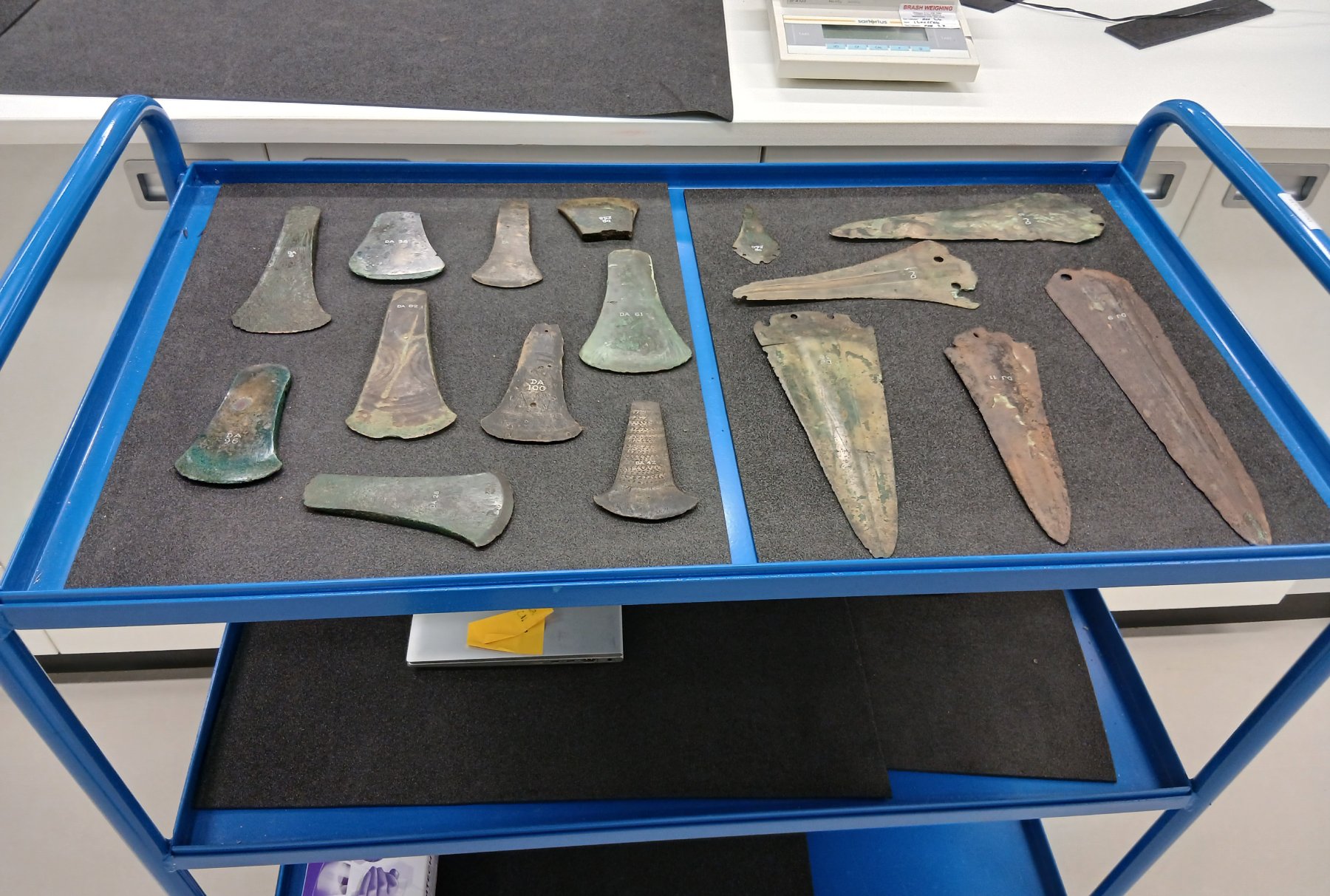
The project focusses on two types of artefact from this period which are representative of different manufacturing techniques which possess differing symbolic and functional roles in society: axes and halberds. In particular, I am interested in the post-casting metalworking stages such as hammering and annealing, and how metalworkers in the past understood what amount of work was acceptable to make a tool or weapon. I will use quantitative analysis of artefacts and qualitative and reflexive experimental bronze working to understand prehistoric metalworking from a scientific and a craft perspective. The project will rely on three main strands of inquiry:
1) A review of metallographic legacy samples taken from Bronze Age artefacts from several collections in Britain, using classic metallographic techniques. This will create a dataset to compare with the results from the neutron analysis method and will be supplemented by analysis using XRF and SEM equipment at Newcastle.
2) The project will employ neutron diffraction at ISIS Neutron and Muon Source to non-destructively generate new information on artefacts that have not been previously investigated. Neutron probes are able to provide insight into the metal phases, tin content, and microstructure of an artefact remotely.
3) Finally, to replicate an inductive, embodied production of artefacts, the project will also create several replica artefacts based on the data generated from ancient artefacts by methods 1 and 2. This will help to elevate technological and social interpretation of the archaeometallurgical data into an analysis that considers the inductive, embodied experience and skill of ancient craftspeople.
This exciting project will hopefully bridge the gap between scientific and craft understandings of metalwork in the past, and allow for a more nuanced discussion of the development of metallurgy in the north of Britain.