World Town Planning Day 2026 - 8 November
To mark World Town Planning Day, staff at the School of Architecture, Planning and Landscape reflect on how communities, professionals and new technologies are shaping the places we live.
6 November 2026
World Town Planning Day provides an opportunity to reflect on how planning shapes where we live, exploring this both internationally and locally, as well as understanding the impact that new artificial intelligence technologies are having on the profession. Within Newcastle, Dr Julia Heslop works with community partners on long-term participatory and creative research projects across the North East. Her work is driven by working with communities into discussions about where they live, reflecting on the ecological impacts of development, land and property ownership, housing precarity, urban planning and local democracy.
Dwellbeing Shieldfield
This includes co-initiating Dwellbeing Shieldfield, based on the Shielfield in the East of Newcastle. The project began as a response to the rapid development of new student accommodation in the area, leading to residents feeling sidelined. It has since grown into a resident-led Community Benefit Society and co-operative, now running a food growing programme, a youth programme and a social programme, and developing a new spatial strategy for the neighbourhood and its green spaces. In 2025, Dwellbeing Shieldfield won a Thornton Education Trust Award in the Community category for its work engaging young people in public space design and development.
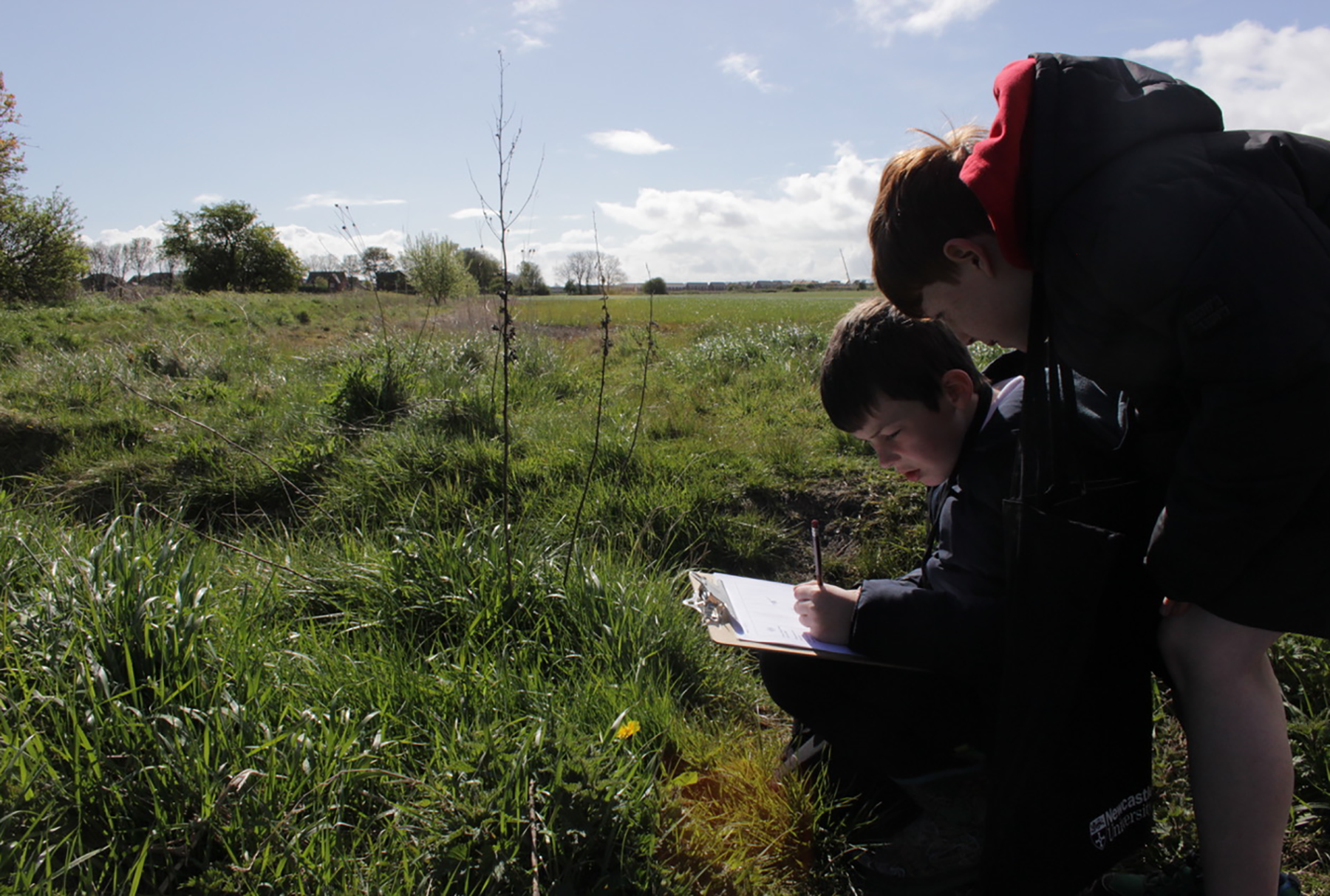
Julia’s wider research looks at experiences of landscape change. Her most recent long-term project, This Was All Fields, tracks the cultural and ecological impacts of large-scale housing developments through creative practice. It brings together surveys with local botanists and naturalists and collaborations with local schools and heritage organisations.
Right image above by Julia Heslop. Children from Langley First School undertaking a sensory, creative walk on the fields around their school which are at risk from new housing development.
Contested Territories
On an international scale, Dr Gabriel Silvestre has been asking and documenting how communities can play a more direct role in shaping the places where they live. The EU Horizon 2020-funded Contested Territories project examined grassroots responses to housing insecurity, displacement and urban inequality across Latin America. Working with community organisations, planners and researchers, it documents how residents organise to secure housing, improve infrastructure and advance alternative visions of urban development.
The web series Community-led Planning is used as a teaching resource on participation, housing and urban justice. The feature-length documentary A Place in the City brings together community testimonies, archival material and research findings from Argentina, Brazil and Chile. It has been screened in around 40 community, cultural and university venues, reaching audiences of more than 1,000 people, and in 2026 received a Merit in Film Award at the LASA International Film Festival.
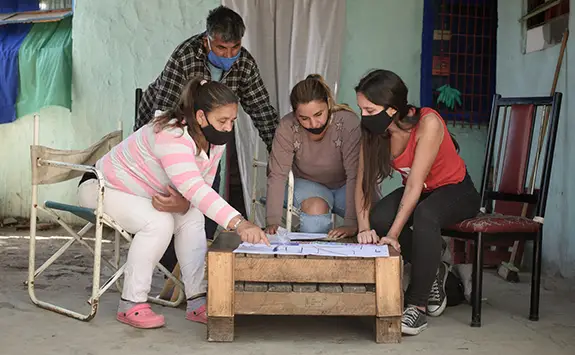
Left image above: Community masterplanning in Rosario, Argentina (source: Ciudad Futura)
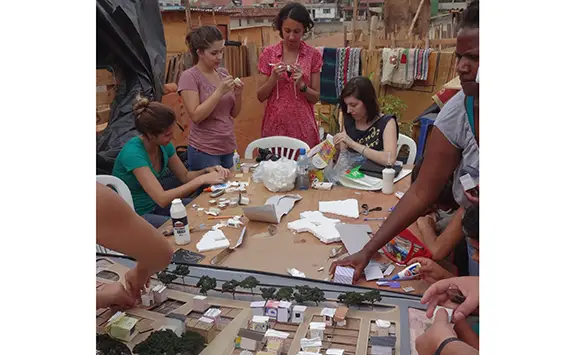
Right image above: Architecture & Planning students working with residents at a land occupation in Belo Horizonte, Brazil (source: Thiago Castelo Branco Lourenço)
Digital technologies in planning
We’ve also been busy focussing on how the changing shape of the planning profession. Over the past few years, we have seen the rapid acceleration in the promises, and roll-out of digital technologies in planning. To understand how this is shaping the profession, Dr Andrew Donaldson, Dr Brendan Doody, Dr Ruth Machen, Dr Lotte Dijkstra, and Dr Alexander Wilson ran a small-scale pilot project aiming to understand how AI and emerging digital technologies might change professional planning practice and the wider processes of planning and place making in future. As well as considering the possibilities and promises of new technologies, we were interested in what might be ‘lost’ as part of a digital transition in planning. To think about these issues collectively - as academics and professional planners together - we developed a speculative storytelling activity based around imagining a day in the life of a planner ten years from now.
Our discussions raised concerns that a profession which becomes heavily AI-mediated will lose or sideline the aspects that practitioners value most. Our human knowledge and creativity, grounded in interaction, being replaced by an increased focus on technical procedure. Participants noted a disconnect between those promoting and designing technologies, and the reality of the job and profession, paired with a lack of faith that technology could ever achieve what its champions promise. They raised concern for loss of skills, drawing an analogy with the decline of skill in other crafts, and a desire for technology to be more effective in supporting them with routine administrative work over doing their work on their behalf.
Our students engage with many of the same questions explored in our research, with modules focussed on community participation and housing justice to sustainability and digital transformation. Through live projects, fieldwork and collaborations with external partners, they gain first-hand experience of addressing real planning challenges while contributing to debates that are shaping the future of places both internationally and closer to home.