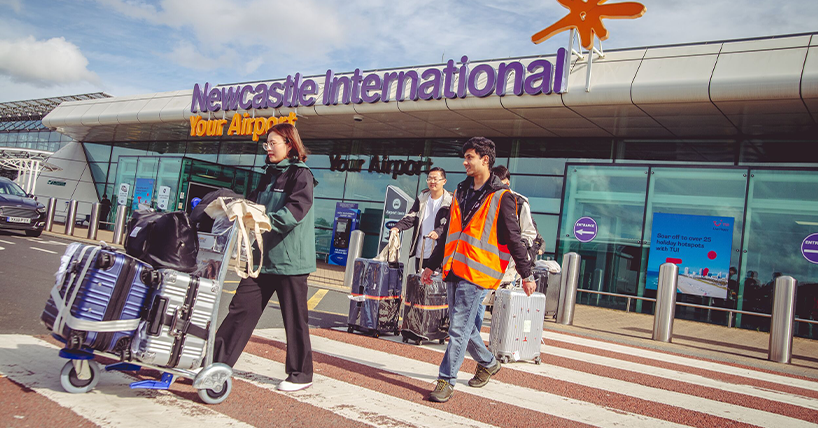
Welcome to Newcastle: A Guide for International Students
Moving to a new country is a big adventure, and Newcastle is a welcoming place to start your journey. This guide will help you settle in, find your feet, and make the most of your first few weeks here.
8 October 2024
Banking in the UK
Opening a UK bank account is one of the first practical steps you’ll need to take. Most major banks in Newcastle City Centre, like HSBC, Lloyds, Barclays, NatWest, and Santander, offer accounts designed specifically for students and international students.
You’ll usually need to take your passport, your offer letter from Newcastle University, and proof of your address (for example, your accommodation contract). Some banks even allow you to open an account online before you arrive, which can save time and make your first week a little easier.
Food shopping made easy
Newcastle has plenty of supermarkets to choose from - Tesco, Sainsbury’s, Aldi, Lidl, and Morrisons are all popular. For a real local experience, check out Grainger Market in the city centre, where you can buy fresh fruit, vegetables, and international foods at great prices. If you don’t have a car, online grocery delivery services like Tesco.com, Asda.com, and Morrisons.com are a lifesaver. You can order everything you need and have it delivered straight to your accommodation. Just choose a delivery slot that suits your schedule. Just make sure you don’t schedule this during home student move in – your accommodation will be jam packed with cars!
Registering with a GP (Doctor)
In the UK, your local GP (General Practitioner) is your main contact for health concerns. Registering with one early is important so that you can access healthcare when you need it. Many students choose the Newcastle University Medical Centre, which is close to campus and is used to working with international students. You can find a GP near you through the www.studentpreg.org.uk and register online.
Emergency contacts
If you ever find yourself in an emergency, dial 999 for the police, fire service, or ambulance. For non-urgent medical advice, call 111, and for non-emergency police matters, call 101. These numbers are free to call and available 24/7, so you’re never without help.
Getting a UK phone number
A UK SIM card makes life much simpler for banking, deliveries, and staying in touch. You can pick one up from local phone shops such as EE, O2, Vodafone, Three, or even from supermarkets like Tesco or Asda.
If you’re here for a short stay, a Pay As You Go SIM gives you flexibility. For longer study periods, a monthly SIM-only plan can save you money. Just make sure your phone is unlocked before you arrive.
Getting around Newcastle
Newcastle is a compact and well-connected city, which makes getting around easy. The Metro is a fast and affordable way to travel across the city, to the coast, or even to Newcastle Airport. You can use a Pop card or just pay at the machines (using cash or contactless) for your journeys.
The bus network is extensive too, with Stagecoach, Go North East and Arriva services running across the region. Download their apps to check routes and timetables in real time. If you’re going further afield, trains from Newcastle Central Station can take you to Edinburgh, Manchester, London, and beyond. Visit our Travelling Around Newcastle blog for more in-depth information.
And don’t underestimate the power of walking. Newcastle is pedestrian-friendly, and you’ll quickly learn your way around the city centre and campus on foot.
TV licences and streaming
If you are in University accommodation during your first year, you do not need a TV licence, as we provide all residents with one. This means you can watch live TV on your communal televisions for free. If you plan to watch or record live TV or use BBC iPlayer on your personal devices in your bedroom, you’ll need a TV Licence. If you only stream services like Netflix or YouTube, you won’t need one. You can get a licence through tvlicensing.co.uk, and it costs £169.50 per year, which you can pay monthly or quarterly. If in doubt, check with a member of your village staff.
Tap water is safe to drink
Good news - the tap water in Newcastle (as well as the rest of the UK) is completely safe to drink! You don’t need to buy bottled water unless you prefer it. Fill up a reusable bottle and stay hydrated.
Pack for the weather
If you’re arriving from a warmer country, prepare for cooler, wetter weather - especially in autumn and winter. Newcastle’s wind has a reputation of its own! A warm, waterproof coat, some jumpers, and a hat, scarf, and gloves will make all the difference. Stores like Primark and TK Maxx offer affordable options for students.
Getting to know people in Newcastle
One of the best parts of your student experience will be the people you meet. Start by attending ResLife Welcome Events in your Social Space - they’re relaxed, friendly, and a great way to make connections with your flatmates and neighbours.
Don’t miss ResLife ReHome, where you can help yourself to donated items for your room or kitchen (and save money and waste at the same time). When Passport to Independent Living rolls around, it’s a brilliant opportunity to meet your village staff and learn more about university life.
You should also attend the International Arrivals Fair; a welcoming space where you can meet staff from across the university, ask questions, and meet new people.
The people of Newcastle, known as Geordies, are famously friendly. You’ll hear the local dialect everywhere - phrases like “Howay man!” (come on), “Canny” (nice), and “Whey aye!” (yes, absolutely!) will quickly become familiar. Don’t be shy about joining in - locals love when newcomers give the Geordie lingo a try! You can grab yourself a Geordie lingo book on Amazon for under a fiver.
Final thoughts
Starting life in a new country takes courage, and it’s normal to feel a mix of excitement and nerves. Newcastle is one of the UK’s friendliest student cities - you’ll find warmth, humour, and support everywhere you go. So take your time settling in, say hello to people you meet, join in with ResLife and university events, and don’t forget to explore. Before long, you’ll find that Newcastle doesn’t just feel like your university city, it feels like home.