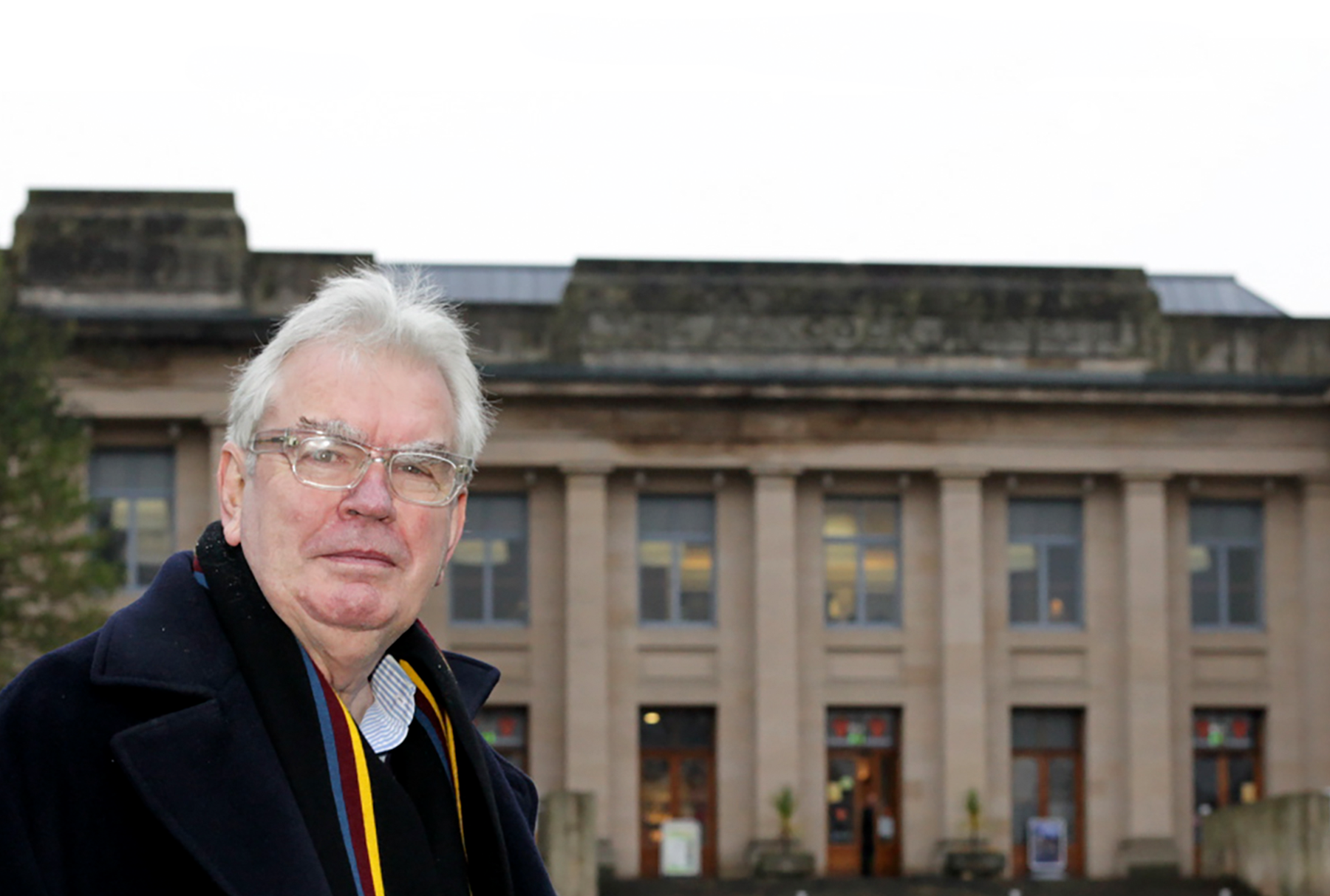
Sir Terry Farrell
The late Sir Terry Farrell was Director of Farrells, a firm of masterplanners and architects with offices in London, Hong Kong and Shanghai.
The late Sire Terry Farrell was one of the world’s most influential architects, planners and urban designers. He made an outstanding contribution to urban design practice, championing urban planning and contributing to policy-shaping at national level in the UK. He made a significant impact on place-making through his professional career as an architect-planner and urban designer.
Over the course of his career Sir Terry was responsible for post-industrial regeneration projects throughout the UK, including Newcastle Quayside, Brindley Place in Birmingham, Edinburgh Exchange district, Greenwich Peninsula and Paddington Basin. In 2008 he was appointed Design and Planning leader for the Thames Gateway, Europe’s largest regeneration project.
Previous projects include Earls Court, Royal Albert Dock and proposals for low cost, lifting bridges in East London. His work on pedestrianising the public realm included the Royal Parks Review, which led to a number of interventions at Park Lane and Hyde Park Corner, and separate studies for the Marylebone Euston Road and Bloomsbury which were initiated voluntarily.
Sir Terry contributed to key strategic issues and policy making at a national level. Most notably he led, at the request of Government, the Farrell Review of Architecture and the Built Environment. The Review, described by the Culture Minister as “the most thorough and wide-ranging exercise that has taken place in this sector for generations”, took a holistic view of the built environment. It made various recommendations which helped to embed planning into place making, including turning design review panels into “PLACE” review panels, and planning applications over a certain size to include an analysis of operational and embedded carbon over a building’s lifetime. Many of its recommendations were carried through into the planning, design and development world by The Place Alliance and a growing number of community focused “Urban Rooms” proposed in the Review.
He was also involved in planning work and large scale urban design and architecture work internationally, particularly in China, India, Australia and Singapore where he won the competition to design and plan one of Asia’s largest high speed rail stations. West Kowloon is used as an international exemplar for transport oriented development with high-density, mixed-use development above a multimodal transport hub.
Farrell's architectural contributions to the city of Newcastle include the design and building of many of the areas most iconic buildings, including: The Centre for Life, the Great North Hancock Museum, as well as Newcastle's Quayside development. He was the London Mayor’s Design Advisor, and advised the Department for Transport on high-speed rail whilst working with various London boroughs on strategic planning. He advised many city leaders in a voluntary capacity such as Edinburgh, Leeds, Hull, Newcastle, Manchester and various Kent and Essex towns and villages. Sir Terry was named a CBE in 1996, a Knight Bachelor in 2001 and won countless awards for his contributions in architecture during his extensive career.